

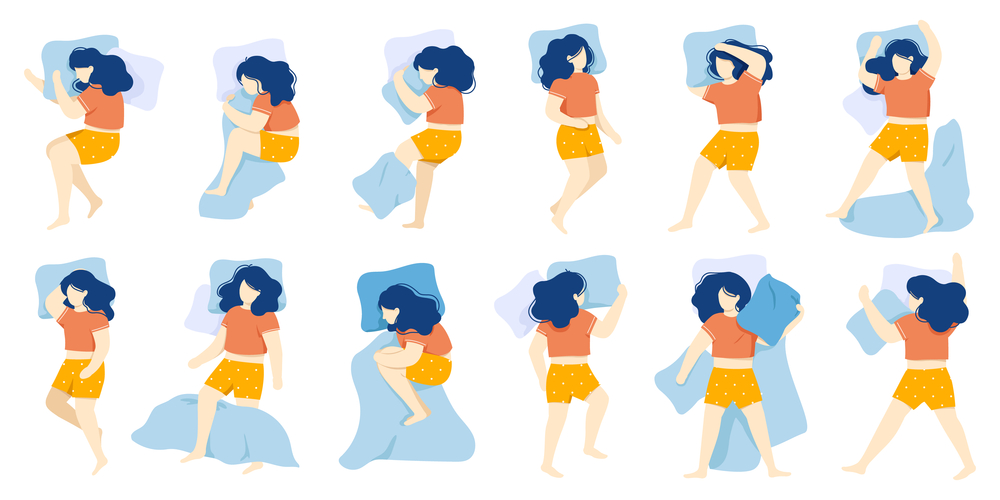
Does sleep position matter for TMJ? The short answer is yes, potentially significantly. If you wake up with jaw pain, facial soreness, or a dull headache that fades as the morning goes on, your sleeping position may be contributing to the problem. Luckily, simple TMJ treatment with Timothy E. Mickiewicz, D.D.S., can help you and your jaw relax better at night.
If you’re tired of waking up with a sore jaw, stiff neck, or tight upper back, it’s time to discuss your options with Dr. Mickiewicz. Call (916) 469-9178 to book an appointment at our Sacramento, CA, dental clinic today!
So, Does Sleep Position Matter for TMJ? The Research Says Yes
The relationship between sleep posture and jaw health has received growing attention in the clinical literature.
Studies find that sleep position significantly influences the pressure placed on the temporomandibular joint and surrounding musculature. For example, patients who slept on their sides (particularly those who pressed their face into a pillow) demonstrated higher rates of TMJ-related morning pain than those who slept on their backs.
This finding matters because most adults spend six to nine hours in bed each night. If your sleep position is compressing, twisting, or misaligning your jaw for that many hours, the cumulative effect on the TMJ over weeks, months, and years can be substantial.
The Three Main Sleep Positions and What They Do to Your Jaw
Understanding how each sleep position affects the jaw helps clarify the question, “Why does sleep position matter for TMJ?”
Back Sleeping
- Generally considered the most TMJ-friendly position
- Keeps the spine, neck, and jaw in a more neutral alignment
- Reduces direct pressure on either side of the face
- Allows the jaw muscles to rest without compression
Side Sleeping
- The most common sleep position among adults
- Can press one side of the jaw into the pillow, creating asymmetric pressure
- May cause the jaw to shift out of its natural resting position
- Over time, consistent one-sided pressure can contribute to muscle imbalance and joint irritation
Stomach Sleeping
- Widely considered the most problematic position for TMJ health
- Forces the neck into a rotated position for extended periods
- Places the jaw under direct downward pressure against the mattress or pillow
- Strains the muscles and ligaments that support the temporomandibular joint
How Pillow Choice Intersects With Sleep Position and TMJ
Your pillow is not just a comfort accessory. Indeed, it directly influences the alignment of your head, neck, and jaw during sleep. A pillow that is too high, too flat, or too firm can force the neck into an unnatural angle that transmits stress directly to the TMJ.
What to Look for in a TMJ-Friendly Pillow
Back sleepers benefit from a pillow that is no more than 5 inches in height. This supports the natural line of the cervical spine without inclining the forehead or dropping the jaw downward too much.
Side sleepers need a firmer, higher pillow that keeps the head level with the spine and reduces lateral jaw compression.
Stomach sleepers with TMJ concerns should consider transitioning away from this position entirely, but if that is not immediately possible, a very flat pillow minimizes neck rotation.
Cervical contour pillows are specifically designed to support spinal alignment and may reduce TMJ stress for certain patients. A conversation with Dr. Mickiewicz can help you identify the pillow type most suited to your specific jaw anatomy and sleep habits.
Does Sleep Position Matter for TMJ When You Already Wear a Night Guard?
Many TMJ patients already use a night guard, which is an oral appliance worn during sleep to protect the teeth from grinding (bruxism) and to reduce pressure on the joint. Night guards are effective and widely recommended. But does sleep position matter for TMJ even when a night guard is in place?
The answer is still yes. A night guard protects the teeth and cushions the joint from the forces of bruxism, but it does not counteract the mechanical pressure created by lying with the face pressed into a pillow for hours.
Both interventions address different aspects of nighttime jaw stress. Using a night guard and optimizing your sleep position together produces better outcomes than either approach alone.
Muscle Memory, Habit, and the Challenge of Changing How You Sleep
Sleep position is largely governed by habit and muscle memory. Most people shift positions multiple times during the night without any conscious awareness.
Practical Strategies for Retraining Your Sleep Position
Changing a deeply ingrained sleep habit takes patience and a few deliberate techniques. Here are approaches that many TMJ patients find helpful:
- Place a body pillow along your side to make rolling onto your stomach physically uncomfortable
- Use a pillow wedge or positioning bolster behind your back to maintain a back-sleeping posture
- Sew a tennis ball or small foam block into the back of a sleep shirt to discourage stomach sleeping
- Set a consistent sleep and wake schedule to reduce restless tossing and turning
- Practice relaxation techniques before bed to reduce the muscle tension that drives position-seeking behavior
Retraining your sleep position typically takes several weeks of consistent effort. Progress is gradual, but most patients who commit to the process report noticeable improvements in morning jaw comfort within one to two months.
When to Seek Professional Help for TMJ Pain
If you wake up regularly with jaw pain, headaches, or facial soreness, self-management strategies are a valuable starting point. However, they are not a substitute for professional evaluation. Dr. Mickiewicz can assess the structure and function of your temporomandibular joint, identify contributing factors, and recommend a personalized treatment plan.
Signs It’s Time to See Your Dentist in Sacramento
- Morning jaw pain that persists beyond an hour after waking
- Audible clicking or popping that has recently worsened
- Difficulty opening your mouth fully or jaw locking episodes
- Headaches that occur daily or several times per week
- Neck and shoulder pain that accompanies jaw discomfort
Treatment options for TMJ disorders range from conservative approaches (like night guards, physical therapy, and anti-inflammatory medications) to more advanced interventions for severe cases. The earlier you seek evaluation, the more options you typically have available.
Support Better Sleep and TMJ Health with Timothy E. Mickiewicz, D.D.S.
Does sleep position matter for TMJ? It certainly does. Luckily, you can combat improper sleeping positions with a consistent sleep plan and a visit to your favorite dentist in Sacramento, CA. Click here to book an appointment with Dr. Mickiewicz and his team, or contact our office at (916) 469-9178 for information and scheduling.